Windsor winters bring slush, road spray and salt into every driveway and garage. Even if you do not spread much salt at home, your vehicle tires carry it back from the road. That salty meltwater then sits on concrete, especially near garage doors, tire paths and low spots in the driveway.
Over time, that exposure can leave concrete dull, dusty, pitted or flaky. The problem is not always one big failure. It is often slow surface wear that becomes obvious after a few seasons.
Why salt is hard on concrete
Salt changes how water freezes and melts. Instead of one clean freeze, the surface can go through repeated melt-and-freeze cycles. Moisture enters pores and small cracks, then expands when it freezes. That movement stresses the surface and can contribute to scaling, spalling and early wear.
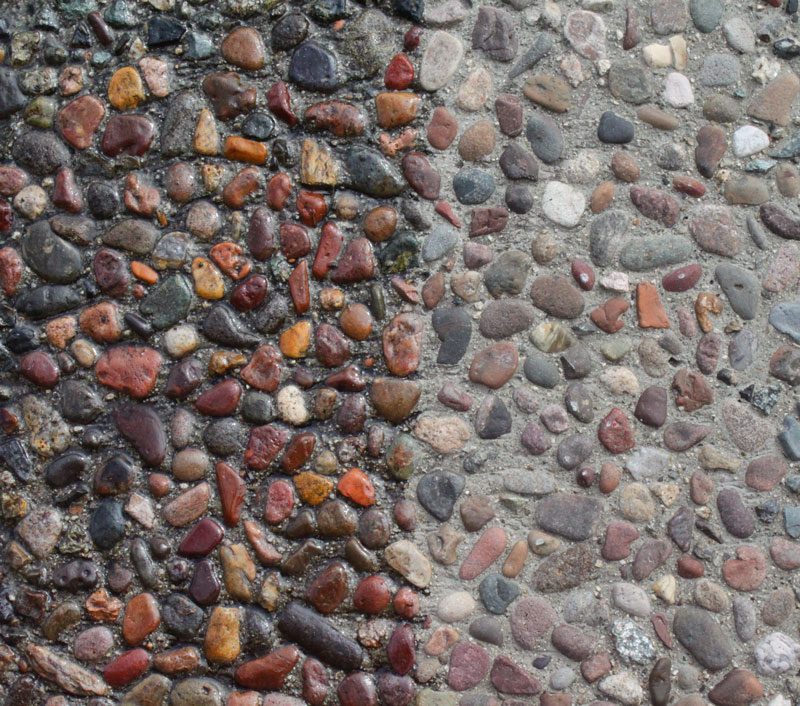
Concrete that is already porous, unsealed or poorly finished is more vulnerable. Exposed aggregate can lose its rich sealed look. Garage slabs can show tire-path wear, dusting and staining where salty water drips off vehicles.
Where salt damage usually shows first
- At the garage door where snow and slush melt.
- In tire tracks where vehicles park.
- On driveway low spots that hold water.
- On exposed steps and walkways that are salted for traction.
- On unsealed exposed aggregate that no longer beads water.
If concrete is already scaling or breaking apart, sealer will not rebuild it. But sealing healthy concrete and coating garage slabs can help reduce future water and salt exposure.
How sealing helps exterior concrete
Concrete driveway sealer helps the surface shed water and reduces how quickly moisture can soak in. For exposed aggregate, it also restores richer color and gives the stone that wet-look finish many homeowners want. The goal is maintenance and protection, not hiding serious structural damage.
For Windsor–Essex homes, resealing before the old sealer is completely gone is usually easier than waiting until the surface is dry, faded and worn down.
How garage floor coatings help inside
Garage floors have a different need. A professional epoxy or flake system creates a sealed, cleanable surface over properly prepared concrete. Instead of saltwater soaking into bare concrete, it can be washed away from the finished floor.
That is why surface prep matters. The concrete needs to be mechanically prepared, cracks and defects need to be handled, and the coating system needs to match the garage use.
Simple winter habits that help
- Push heavy slush out of the garage instead of letting it sit.
- Rinse salt residue from sealed or coated surfaces when weather allows.
- Watch for areas where water pools near the garage door.
- Book sealing or coating work before the next winter season if the surface is already fading or absorbing water.
Protect concrete before salt season.
Phoenix Epoxy installs garage floor coatings and concrete driveway sealer across Windsor, LaSalle, Tecumseh, Lakeshore, Essex and Amherstburg.